↑ Free AI photo check · For adults 18+

How to Look Better in Pictures

Looking better in pictures is not about angles that hide your face — it is a short list of photo variables: light, distance, framing, a moving expression, and a background that stays out of the way. Set each one, then verify with a free check.

No accountNo public ratingOriginal photo deleted after processing

Home/How to Look Better in Pictures
amipretty.org — photo checkPrivate · 18+

Upload the photo that bothered you. The check reads its light, framing, crop, and expression, then names what specifically made it unflattering.

Choose a Photo

  • Use a photo with one clearly visible adult face.
  • The photo you dislike is the best one to test.
  • Your processed photo is analyzed privately, then deleted.

↑ Light first

How Light Helps You Look Better in Pictures

If you change only one thing about how you take pictures, change the light. It beats every tip about angles and posing.

Face the light source, don't hide from it

Soft, directional light — a window, open shade, golden hour — wraps the face with gentle gradients and flatters skin. Stand facing the light; standing with it behind you forces the camera to expose for the bright background and sinks your face into shadow. Overhead ceiling light and direct flash carve hard shadows under the eyes and nose, which reads as tired no matter how you feel.
Size and direction beat brightness

A big light source close to you (a window on an overcast day) softens every shadow; a small, hard one (noon sun, a bare bulb) sharpens them. If the sun is out, move into the edge of a shadow rather than fighting glare. Warm early and late daylight is kinder to skin tones than blue-white fluorescents — which is why golden-hour photos keep outperforming office photos of the same person.

↑ Farther, higher, breathing room

How Distance, Angle, and Framing Make Pictures Look Better

Distance, angle, and crop are three dials of the same geometry — and all three have settings that flatter everyone.

The same synthetic adult woman in a tight crop that cuts off the top of her head beside the same woman framed with comfortable headroom and shoulders in view
A crop that fights the face creates tension; headroom lets the face sit comfortably in the frame.

Distance: shoot from conversation range

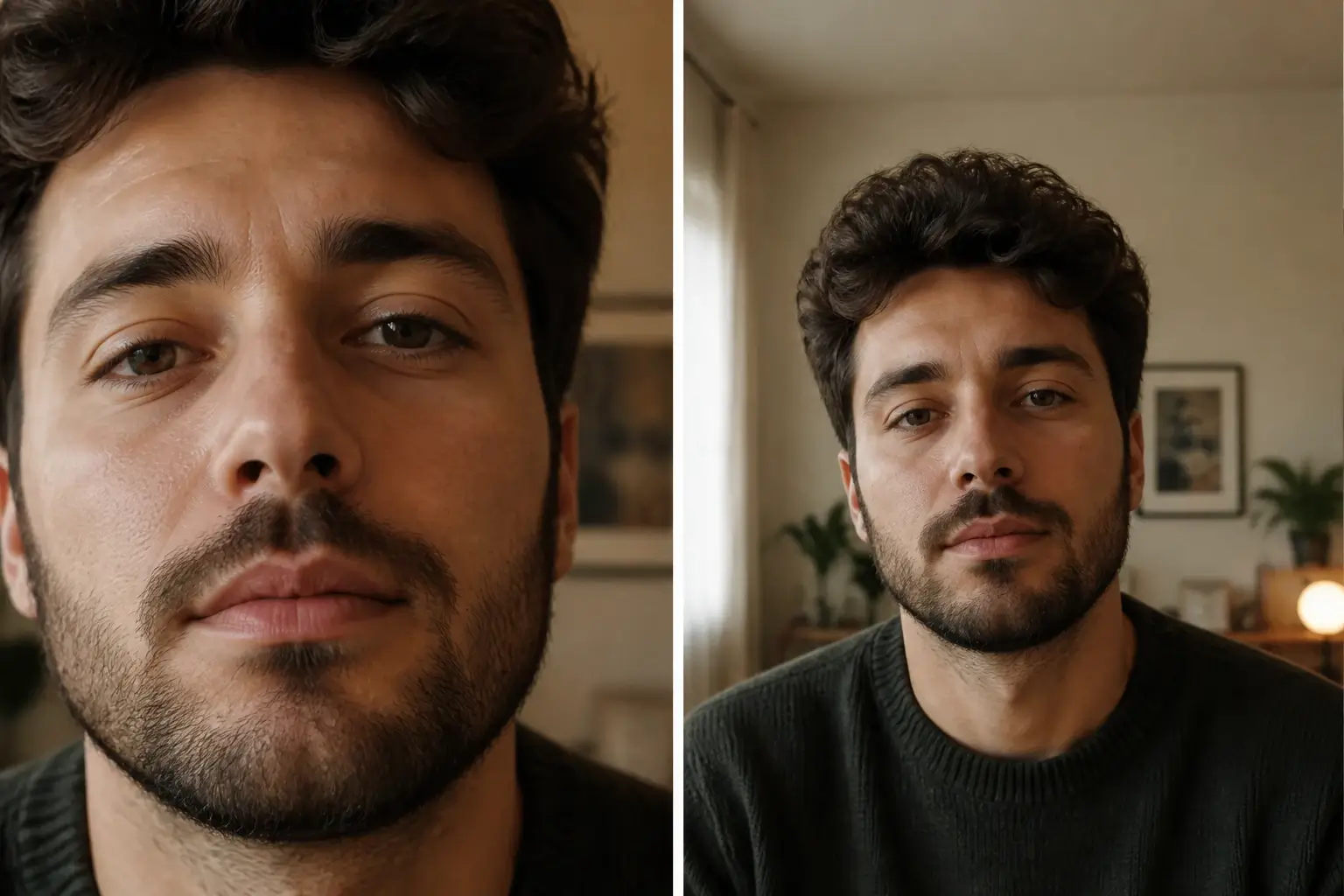
Selfies are taken well inside the distance friends see you from, and that proximity exaggerates whatever is nearest the lens. Hand the phone to someone or prop it up, step back farther than feels natural, and shoot. The same face reads more balanced from across a table than from arm's length — geometry, not judgment.

Angle: eye level, or a touch above

Camera at eye level keeps proportions honest; slightly above tends to define the jawline and keep the eyes open toward the lens. Below eye level is the least flattering position — it stacks the chin and nose toward the camera. Feeling awkward at that distance is fine; it is exactly why the photo will look better than a selfie.

Framing: give the crop headroom

Cutting through joints — the top of the head, the chin, the neck — creates subconscious tension, and a face jammed against the frame edge reads as cramped. Leave air above the hair and keep the shoulders in view. If a shot comes out too tight, crop the wider photo later rather than shooting close.

↑ Stop posing, start moving

Better Pictures Catch You Mid-Motion

The least flattering photo of you is almost always a frozen instant you did not choose. The fix is motion, not a better pose.

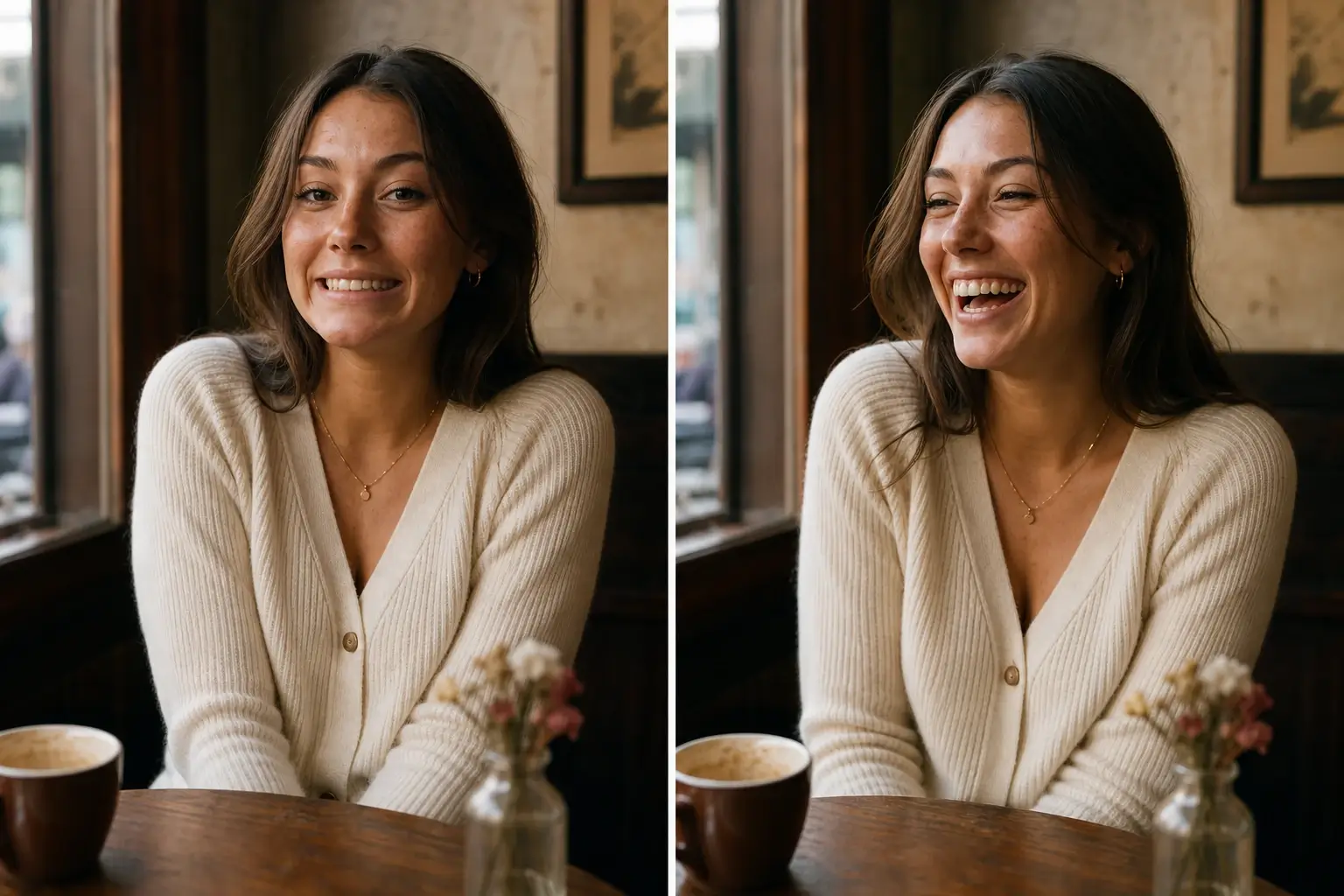
The same synthetic adult woman holding a stiff posed smile beside the same woman laughing mid-motion with relaxed shoulders
A held smile reads as held; expression caught mid-motion is what people actually see in person.

Why held smiles look wrong

In person, people experience your face in motion — blinks, posture shifts, the asymmetry of a live expression. Research on the frozen face effect found that still frames taken from video are rated less flattering than the moving video itself. A smile held for the camera is exactly that: one static frame, carrying all the tension of being held.

Move, then shoot the burst

Exhale, laugh at something real, or turn slightly between frames while someone takes a short burst — then keep the frame where the expression was moving. Mid-motion frames catch the eyes and mouth in configurations no held pose reaches. That is the real mechanism behind "candid photos always look better": they sample the moving version of you.

↑ A background that flatters

One Step Sideways Fixes Most Pictures

The background's job is to stay out of the way. When it competes, the face loses.

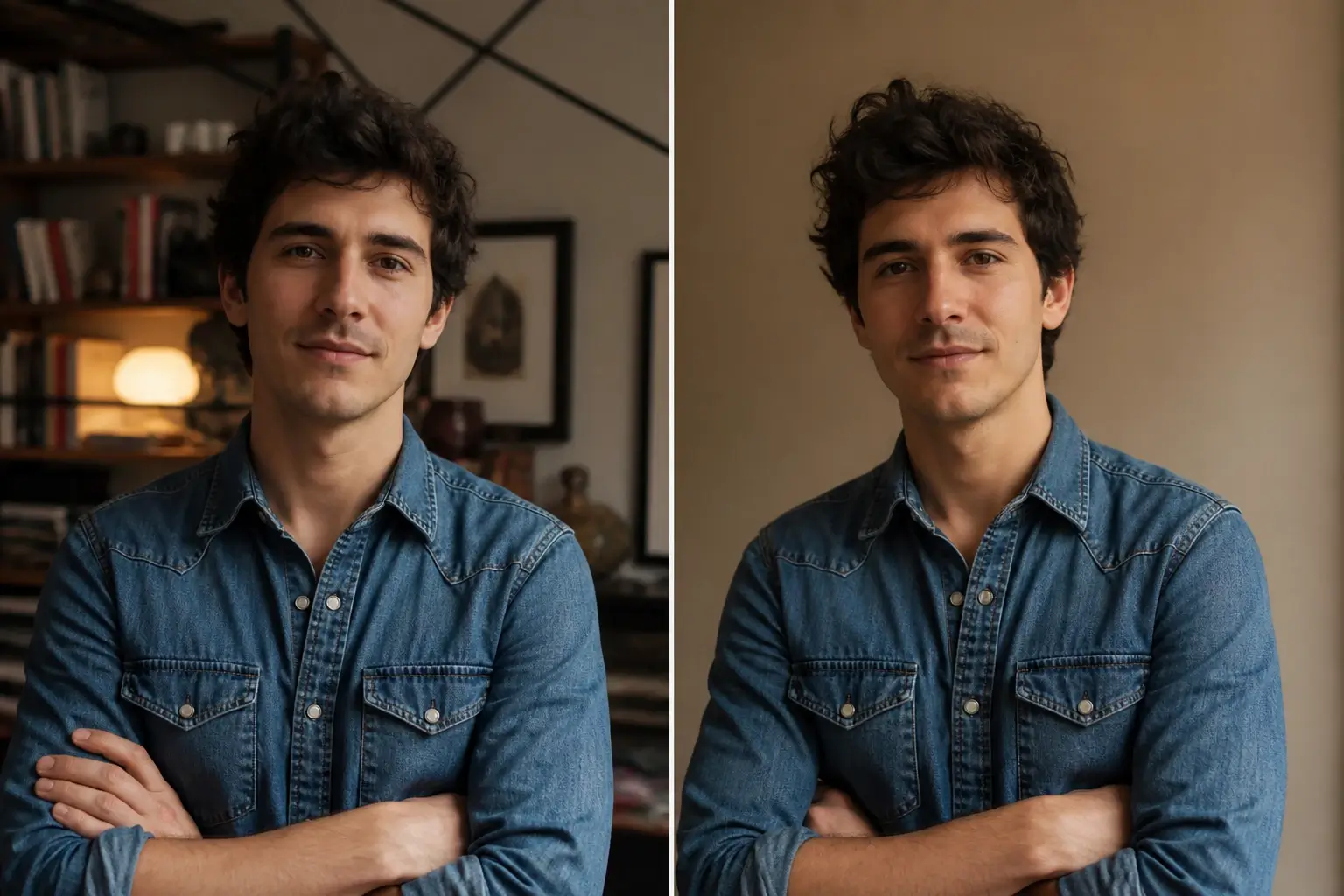
The same synthetic adult man in front of a cluttered busy background beside the same man one step to the side against a clean softly blurred wall
Clutter and bright spots pull attention off the face; one step sideways clears the frame.

Declutter by moving, not by editing

Busy shelves, strong lines crossing the head, and backgrounds brighter than the face all pull attention away from you. Before the shot, step left or right and check what sits behind you — most cluttered backgrounds become clean from a slightly different spot. The cheapest photo improvement available is a single sideways step.

Keep the contrast on your face

The brightest, sharpest part of a photo draws the eye. If the background is brighter than you — a window, a lamp, sunlit pavement — the picture will feel off even if nobody can say why. Turn so the light falls on you, or pick a spot where the background sits darker and softer than your face.

↑ The 60-second checklist

The 60-Second Checklist for Better Pictures

Run this list before the next photo — sixty seconds of setup.

  1. Face a window or stand in open shade — soft, directional light on your face.
  2. Step back farther than feels natural; hand the camera to someone or prop it up.
  3. Keep the lens at eye level or slightly above.
  4. Leave headroom — no crop cutting through your head, chin, or neck.
  5. Take one step sideways until the background is clean and darker than your face.
  6. Give your hands a job and drop your shoulders.
  7. Exhale or laugh, then shoot a short burst — keep a mid-motion frame.
  8. Verify the result with a check instead of a hunch; one bad frame proves the frame, not the face.

None of these change your face. They change the variables of the photo — which is why the same person can look like a different person across two pictures, and why the check reads the photo rather than judging you.

↑ FAQ

How to Look Better in Pictures: Questions, Answered

What is the most flattering angle for photos?

Camera at eye level or slightly above, from farther back than feels necessary. Eye-level framing keeps proportions closest to what people see in person; slightly above defines the jawline. Close, low angles do the opposite — perspective exaggerates whatever is nearest the lens, usually the nose and chin.

How do I look better in pictures taken on my phone?

Use the rear camera when someone can shoot for you, step back and crop instead of shooting at arm's length, face a window, and take a short burst so you can keep the frame mid-motion. Arm's-length selfies combine the two least flattering variables: very close distance and an awkward reach angle.

Why do I look good in some photos and bad in others?

Because every photo is a different sample. Research on within-person face variation shows different photos of the same person produce strikingly different impressions, and judged traits shift with which photo is shown. A bad photo is evidence about that photo — not a verdict on your face.

How should I smile in pictures so it looks natural?

Do not hold a smile. Exhale, laugh just before the shot, or move slightly between frames, then shoot a burst. Static frames are consistently rated less flattering than the moving face, and a held smile reads as held. Catch expression in motion instead of posing it.

Does the camera really add ten pounds?

The camera adds nothing — proximity does. Photos taken well inside conversation distance exaggerate the center of the face relative to the ears and head outline, which reads as heavier. Step back and the proportions return to what your friends actually see.

What should I do with my hands and posture in pictures?

Give your hands a small job — a pocket, a strap, a cup — and turn your shoulders a few degrees off the lens. The point is not the pose; it is that a body with something to do stops transmitting the frozen tension the camera captures as stiffness.

How can I tell if a photo of me actually looks good?

Verify instead of guessing. People recognize a subtly enhanced version of their own face faster than their real photo, so the picture in your head is an unreliable judge. Run the free check on the exact photo: it reads light, framing, crop, and expression, and names what worked against it.

↑ Sources & limitations

What the Research Above Actually Says

These papers support the mechanisms on this page. None measures your worth; none supports ranking people.

Am I Pretty? evaluates photo presentation — never personal worth, identity, or a universal standard.

See What Your Next Photo Is Missing

Set the eight variables, take the shot, then run the free check — it reads light, framing, crop, and expression, and names what to change next.

Check My Photo — Free