What the score measures
Three signals dominate: how level the head sits, how evenly light falls across both sides, and how centered the face is in the frame. Each is a choice you make when you take the photo — not a property of the face itself.
↑ Free AI face symmetry checker · For adults 18+
Upload one photo to see how balanced the face reads in the frame — and which small presentation choices make the next photo read more even.
No account No public rating Original photo deleted after processing
Symmetry in a photo is a presentation observation, not a beauty ranking. Camera angle, head position, and light change how balanced any face reads.
Choose a Photo
↑ How it works
The test compares how the face reads on each side of the frame: head level, side-to-side light, and even framing. It returns a 0–100 balance score plus three things that already read well and three reversible framing changes to try next.
Three signals dominate: how level the head sits, how evenly light falls across both sides, and how centered the face is in the frame. Each is a choice you make when you take the photo — not a property of the face itself.
Every face is slightly asymmetric in real life, but photos amplify framing: a tilted head, an off-center subject, or a hard side light makes any face read unbalanced. Leveling the camera and evening the light are the fastest wins.
Use it as a photo checklist: center the head, level the frame, even the light. Score again after each change and watch the number move — that movement is the point of a face symmetry test.
↑ What symmetry means in a photo
Every face reads slightly differently from one side, and small presentation choices change how balanced any face looks in a photo. This tool reads the photo — and shows you the reversible choices that move the result.
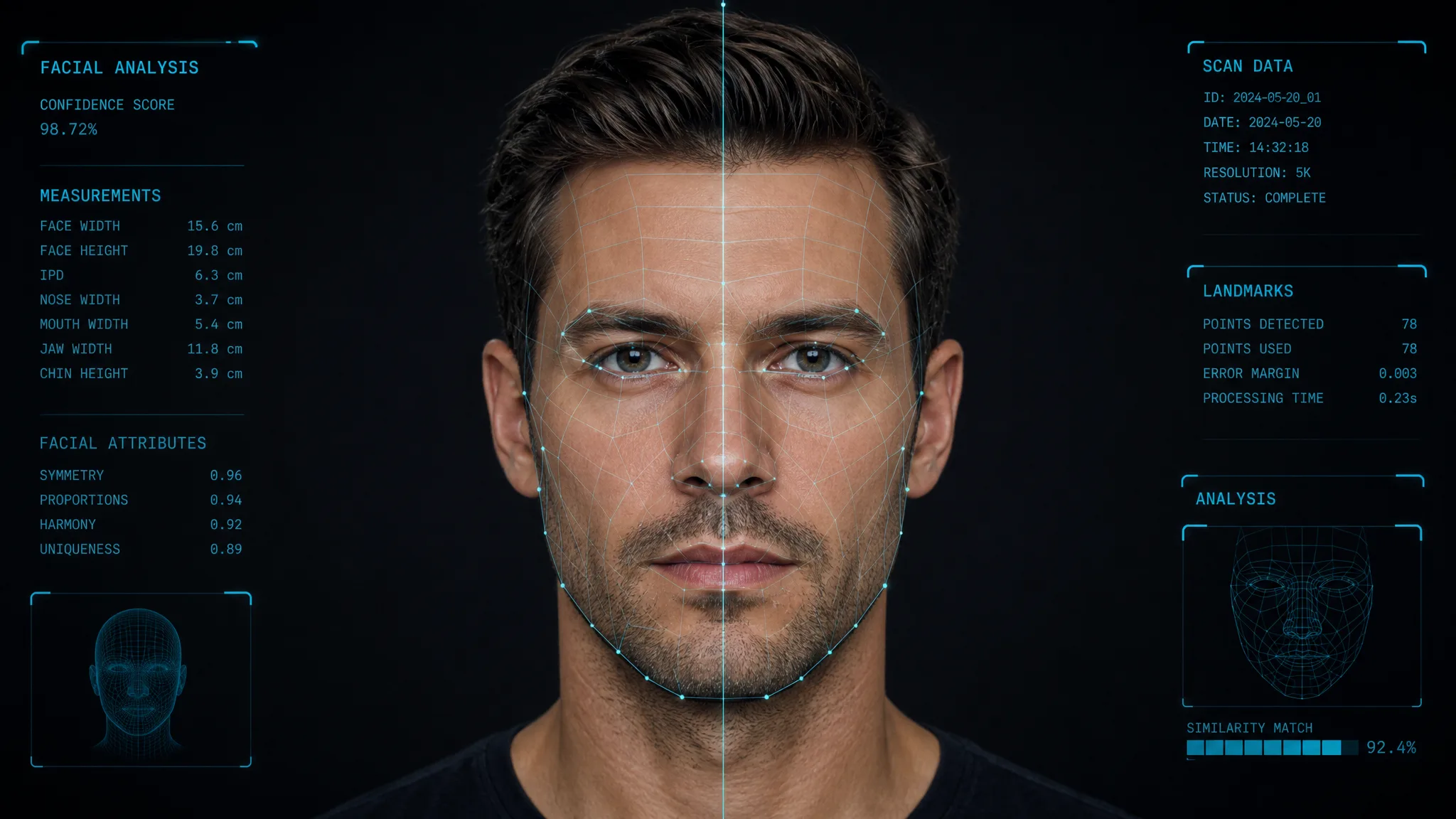
Every face reads slightly differently from one side, and camera angle, head position, and light change how balanced any face looks in a photo. This tool reads the photo, not the person. A face symmetry test is most useful when it is treated as feedback about the frame, not about the face itself.
Head level and centered in the frame, a camera angle close to eye level, and light that falls evenly across both sides are the reversible choices that make a photo read more balanced. Uneven side light and a tilted frame are the usual culprits. Small changes to framing change the symmetry result far more than the face does.
The score is an observation about this photo — not a scientific measurement of the face, a beauty ranking, or a judgment of worth. No AI can objectively decide attractiveness, and this tool does not try to. Use the result as a checklist for your next photo: center the head, level the camera, even the light.
↑ FAQ
It reads how balanced the face appears in one photo: head level, side-to-side light, and even framing. It is a presentation observation about the photo — not a scientific measurement or a ranking of the person.
Head tilt, off-center framing, and light that favors one side make any face read less balanced in a photo. Small camera and framing choices change the result far more than the face itself.
Yes — that is the point of this tool. Centering the head, leveling the camera, and using even light are reversible presentation changes that make a photo read more balanced.
No. This tool treats symmetry only as one presentation signal, and it never ranks the person. No AI can objectively decide attractiveness, and this test does not try to.
A straight-on, front-facing photo with the head level in the frame gives the clearest read. Avoid extreme angles, heavy filters, and light that falls on only one side of the face.
Because the score describes the photo, not the face. Leveling the head, centering the frame, and evening the light are exactly the changes that move the result between shots.
↑ Photo Upgrade Report
Your free symmetry result shows what to adjust. The one-time upgrade shows three AI-generated directions applied to your own photo — angle, light, framing, and styling.
Photo Upgrade Report · Dating
74/100