Can AI really tell me if I am attractive?
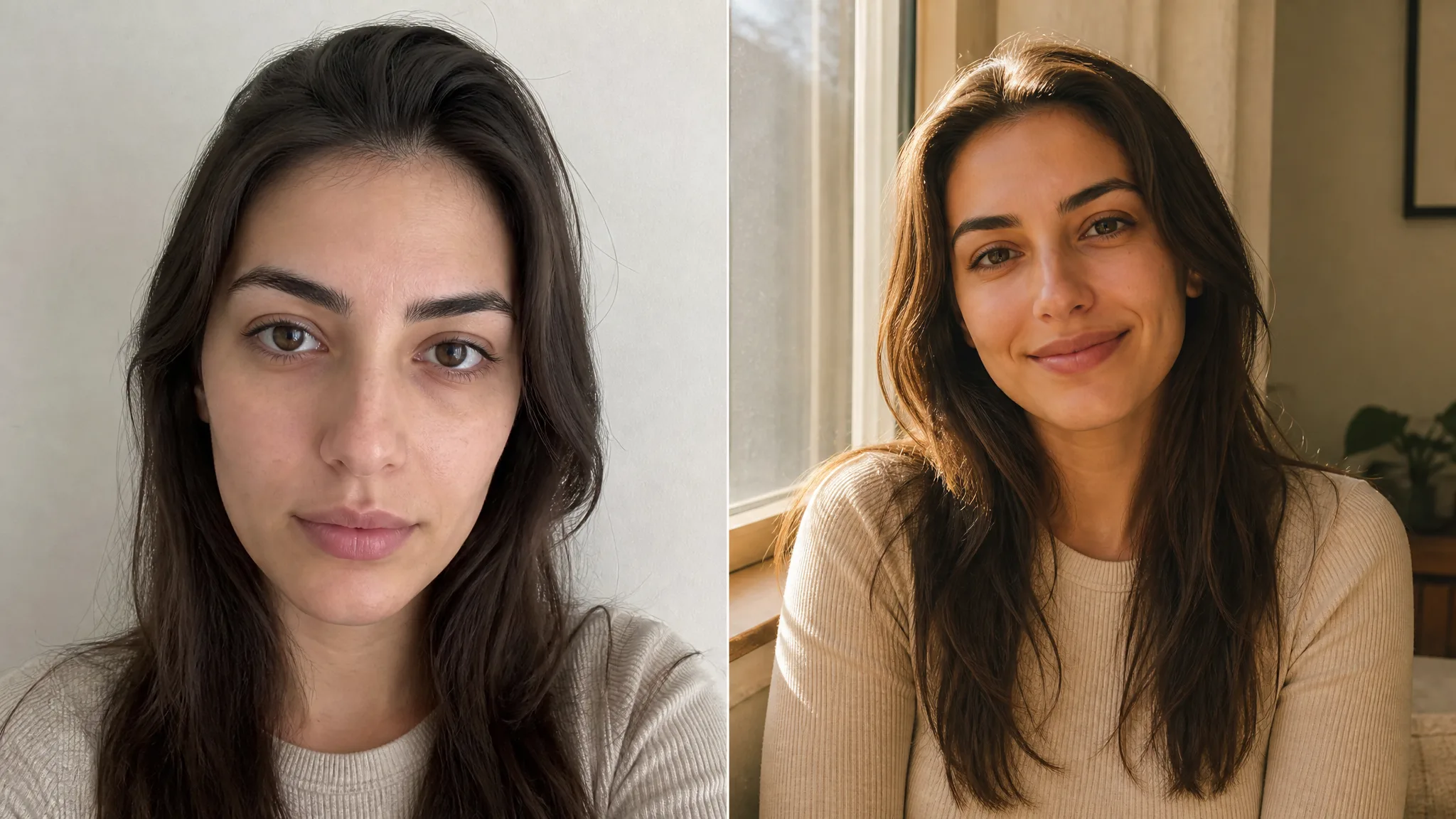
No — and no one can, objectively. Research shows the same person is judged differently across different photos. Am I Pretty? scores how one photo presents you through expression, light, angle, and framing — not your worth or a universal standard.
Why do I look different in different photos?
Every photo is a different set of presentation choices: lighting, angle, crop, expression, and setting. Studies on face perception find large within-person variation across everyday photographs, which is exactly why this tool scores the photo, not the person.
Is my photo public or shared with anyone?
No. Free results are never published or given a public result URL. The processed photo is stored privately only while processing, then deleted, and is never used to train AI models.
What does the score actually measure?
It is a 0–100 interpretation of how this photo presents the person: visible expression and ease, lighting quality, camera angle and framing, and overall presentation. We do not publish population rankings or scientific weighting claims.
Can the same person get a different score in a different photo?
Yes — that is the whole point. The score describes presentation choices like light, angle, expression, and crop, and those change from photo to photo. The same person can and should receive different results in different photos.
What is the best photo to test?
A clear, front-facing JPG, PNG, or WebP up to 8 MB with one adult face and good light. The test reads presentation signals, so a recent photo with natural light gives the most useful result.
Is this attractiveness test suitable for everyone?
Yes — the test scores photo presentation for any consenting adult, any gender, any setting. The advice stays in reversible presentation: expression, light, angle, crop, and styling. It never judges identity, age, weight, or any protected trait.
Do I need the paid report to understand my result?
No — the free result is complete: score, summary, three strengths, and three practical next steps. The optional $9.99 Photo Upgrade Report goes further by showing three AI-generated directions applied to your own photo.
What makes a photo look attractive?
Mostly presentation signals: warm even light, a relaxed genuine expression, an angle near eye level, a clean background, and a crop that gives the face room. Any of these can lift an attractive photo — or sink a flat one — regardless of the face in it.
How is this different from a beauty rating?
A beauty rating claims to judge the person; this test scores one photo. Because the score follows presentation, the same person can look attractive in one photo and unremarkable in another — the test says which one and why.
Will this test tell me I am attractive?
It will tell you how attractive one specific photo presents you, with the reasons in presentation terms: light, angle, expression, framing, and setting. It will not rank you as a person, and it will not claim a universal answer to that question.
Does a higher score mean I look more attractive?
A higher score means this photo presents you more attractive — warmer light, a stronger angle, a clearer frame. It is feedback on the photo, not a verdict on how attractive you are as a person.
How often should I retest?
Retest whenever your presentation changes — new light, new haircut, new angle. The score follows the photo, so each retest shows you which choices make your photos more attractive, and which attractive setup to keep.
What is the difference between this test and a quick rating?
A quick rating gives you a number with no reasons. This am i attractive test returns the score plus three strengths and three practical next steps, so you know what to change in your next photo.